 Family of Sites
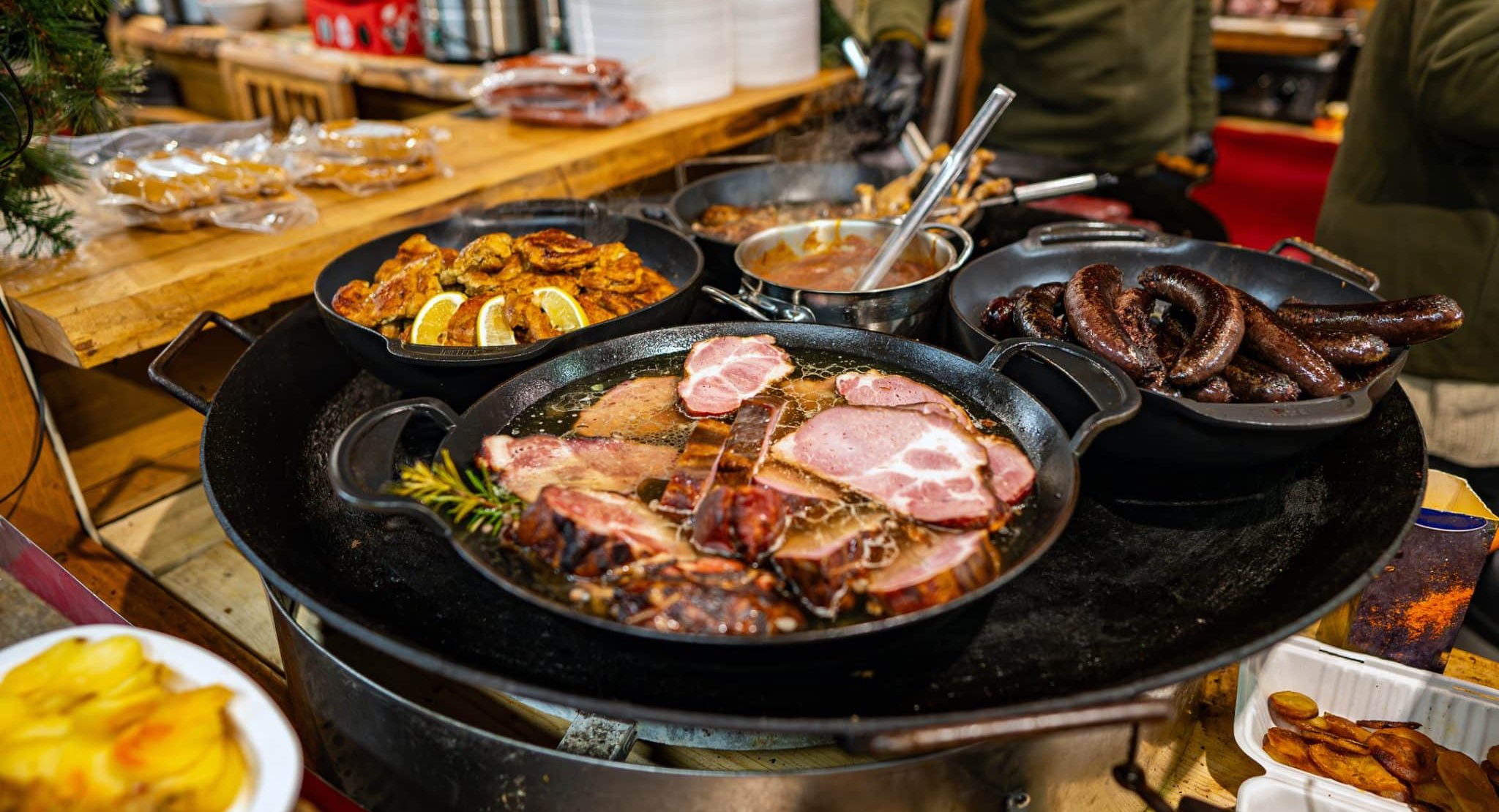
Estonian food shares many similarities with other Baltic states and has additional influences from Finnish, German, and Russian cuisine. The Estonian climate significantly impacts domestic agriculture, although greenhouses allow some items to be grown during otherwise inhospitable weather conditions. Nevertheless, most fruits and many vegetables eaten today are imported. Most traditional are root vegetables such as potatoes, onions, carrots, and beets that thrive in Estonian soil, while pork, chicken, and beef are the main protein sources. Estonia has a thriving dairy industry and grocery shelves are filled with cheese, milk, kefir, sour cream, and cottage cheese.
Estonian cuisine is typically meat-centric and “heavy” with potatoes and breads consumed in large quantities. Although most stores have a section for vegetarian and vegan options now, a meatless lifestyle is not common.
Self sufficiency is valued in Estonian culture. Many Estonians have small gardens, either on their properties or in the countryside. Pickling and canning your own vegetables is common and foraging in the woods for wild mushrooms and berries remains a beloved pastime.
Apples (Ingredient): Apple trees grow throughout Estonia and are found in almost every backyard. During apple season, it’s common to see baskets on the sides of fences filled with apples for passersby to take for free. They are used in a variety of pastries and cakes, or turned into homemade cider or apple wine.
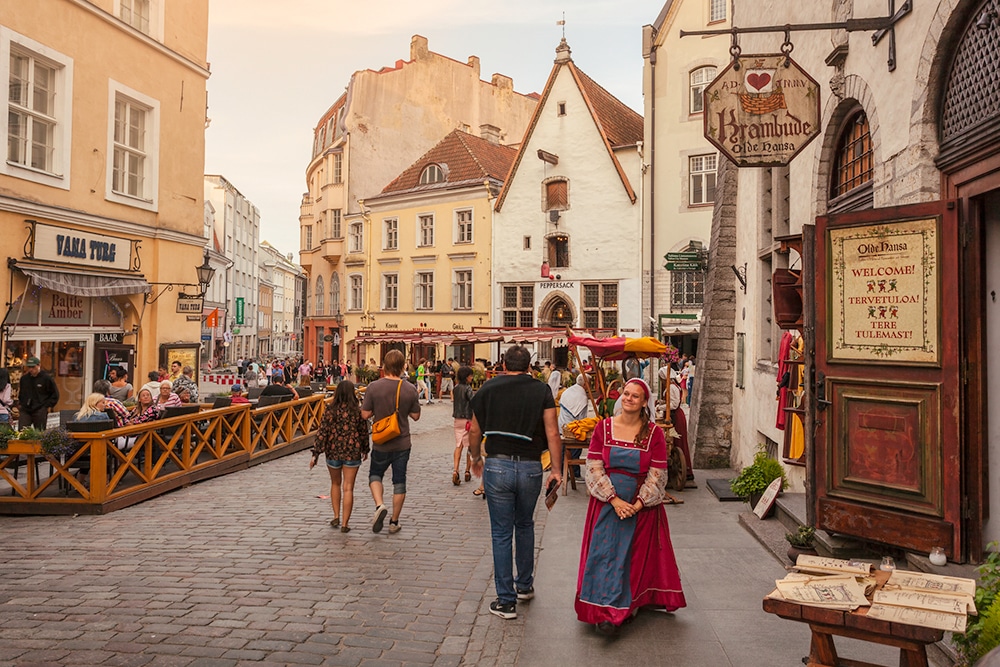
Apple cider (Beverage): Homemade apple cider traditionally contains alcohol and is made using a similar fermentation process to apple wine. The main difference lies in cider’s shorter fermentation stage, which leads to a lower alcohol content than wine. Brewers will experiment with different kinds of apples or added spices (such as cinnamon or clove) for seasonal variety.
Apple wine (Beverage): Homemade apple wine is a favorite way to utilize a bountiful harvest from backyard apple trees. Apples are crushed to extract the juices before sugar and wine yeast are added. After the fermentation process is complete, the result is a delicious drink to share with friends.
Barley bread (Bread): Traditionally the primary food of Estonian peasants, barely bread is still baked fondly among some families and bakeries and often eaten with butter, jam, or honey.
Beer (Beverage): Long a staple drink for Estonian households, beer continues to be highly popular. Homebrewing has been a tradition for centuries and continues today, including the practice of making barley beer or root beer. Homebrewed beer used to be a traditional drink during the holidays – particularly during Midsummer (Jaanipäev) celebrations – although store-bought varieties are more common now. Over 80 breweries exist in Estonia today, and a craft beer scene has flourished, including the Tallinn Craft Beer Weekend, an annual event occurring since 2015.
Berries (Ingredient): Many varieties of berry grow wild in Estonia, including strawberries, blueberries, blackberries, bilberries, cowberries, cranberries, lingonberries, gooseberries, raspberries, sea buckthorn, and currents. Foraging for them is something of a national sport in Estonia. Besides being eaten fresh, they are also turned into jams and spreads, added to porridge, baked into pastries and cakes, or turned into liqueur or wine.
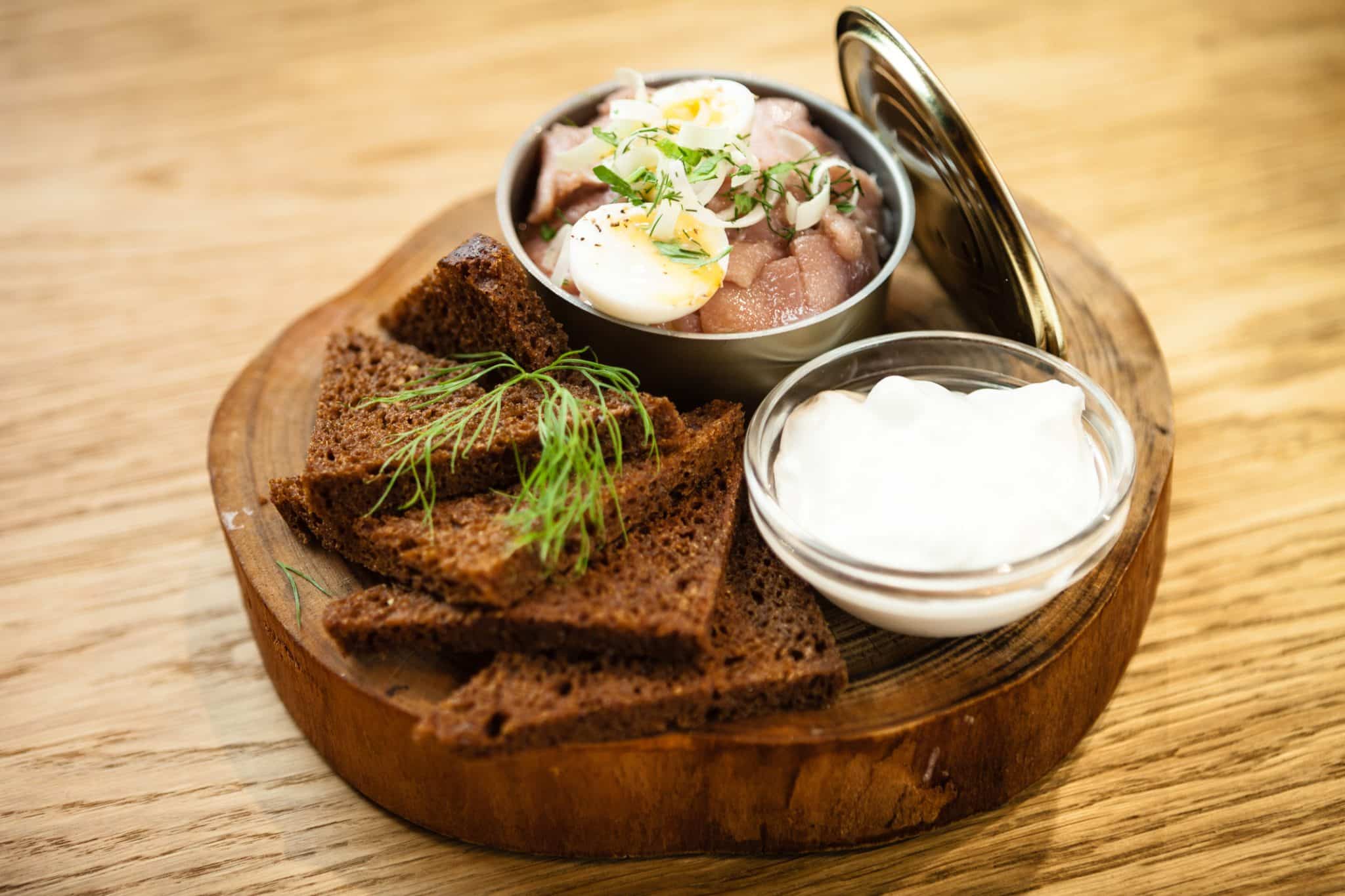
Black bread (Breads): Along with potatoes, bread is the backbone of the Estonian diet. Most common is dark rye bread, known as black bread (or must leib in Estonian), which became widespread in the Middle Ages. Hearty and filling, it’s traditional to eat with smeared pork fat. Many will also eat it with a variety of cold meats, cheeses, or slices of tomato or cucumber for breakfast or lunch.
Blood sausage (Main dish): Traditionally made with pig’s blood, barley groats, marjoram, and onions, Estonian blood sausage closely resembles its Finnish counterpart. Hog casings are used to stuff the sausages and they are one of most common dishes to find on an Estonian Christmas or New Year’s table. They are typically eaten with lingonberry or cranberry jam and served alongside sauerkraut and potatoes.
Buckwheat (Side dish or ingredient): Another widespread staple carbohydrate, buckwheat is a common side dish and ingredient in Estonian cooking. When not served as a side, buckwheat is used in porridge, fritters, salads, and casseroles.
Dill (Seasoning): This is the most popular herb used in Estonian cuisine and is added to soups, vegetable dishes, salads, and even dairy items such as cottage cheese.
Fried bread (Side dish): Stemming from Lithuania, fried black bread rubbed with garlic and herbs is also a favorite in Estonia. You can easily find this on restaurant menus (perhaps listed in the Estonian: küüslauguleivad) as an appetizer. It is also sold commercially packaged at grocery stores as a snack.
Garlic (Seasoning): Garlic is one of the main seasonings used in Estonian cuisine, ranging from an ingredient in pickling brines and meat marinades to sauces and salads.

Gingerbread (Dessert): The main wintertime treat, spicy gingerbread is ubiquitous during the Christmas holidays and can be found in every Estonian kitchen in December. It’s either baked fresh or can be bought in any grocery store.
Herring (Main dish): With its proximity to the Baltic Sea, fish is a major part of Estonian cuisine. Herring holds the top position as Estonia’s national fish and has been for centuries. Most often eaten smoked, herring is also pickled, fried, or marinated.
Honey (Ingredient): Honey is a major Estonian agricultural product and jars of locally-produced honey fill market stands. More than 1,000 tons of honey are produced in Estonia annually thanks to the 8,000+ households which produce honey, either for personal or commercial consumption. It’s used in baking, for marinades, and as a spread.
Honey cake (Dessert): This cake can be found in several European countries, such as Russia where it is known as medovik. It is also widespread and popular in Estonia. Thin layers of honeyed cake are interspersed with a sweetened sour cream icing and allowed to set in the fridge. Cafes typically have a wide variety of cakes on offer, and it’s common to find honey cake among the selection. (Meekook)
Juice (Beverage): Berry juices of various kinds are common in Estonia, as are birch juice and maple juice, which are seasonal drinks.
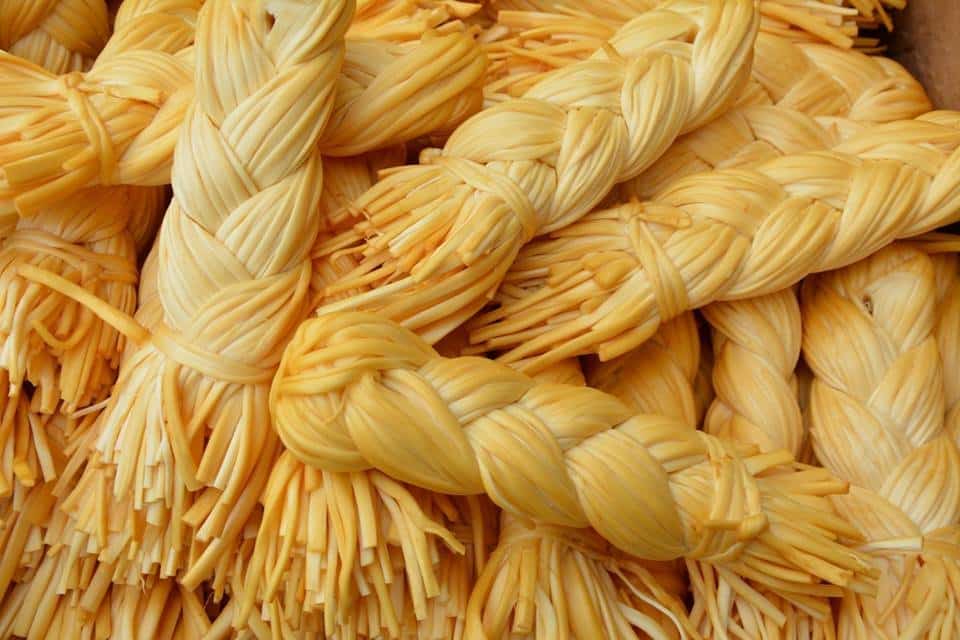
Juustupats (Dairy): Smoked cheese in thin strips are braided together to create a tasty snack. Juustupats can be bought in stores or markets, are often sold at festivals or fairs, and pair very well with beer. The name literally translates to “cheese braid.”
Käkisupp (Soup): Onions are browned in fatty pork (or just pork fat) before barley flour is added to make dumplings. The dumplings are boiled in water, and typically served with the broth. This dish has been eaten for centuries in Estonia, said to have originated from Estonia’s second-largest island, Hiiumaa.
Kali (Beverage): More widely known as kvass, traditional Estonian kali is made by fermenting malt loaves from grains previously used in beer production. When homemade, recipes used birch sap, bread, berries, or other fruits. Kvass was factory produced under the Soviets, but production collapsed after independence in 1991. Latvian kvass was gradually introduced, and by the early 2000s, some Estonian breweries resumed production. Today, however, many kvass/kali brands are carbonated rather than fermented, a process that is generally easier and less expensive.
Kama (Ingredient): Kama is a finely ground grain mixture, consisting of barley, oats, rye, wheat, and peas. Typically it is stirred into kefir or sour milk and drunk as a liquid. It can also be used as the flour base for cake.
Kefir (Dairy): Kefir is a fermented dairy drink common across Eurasia, including in Estonia. It is a beverage or ingredient for making breads, cakes, and other baked goods. Kefir entered the Estonian diet at the end of the 19th century and became widespread during the 20th. It has wide-ranging health benefits and has a lower lactose content compared to milk, making it an attractive alternative for those who are intolerant.
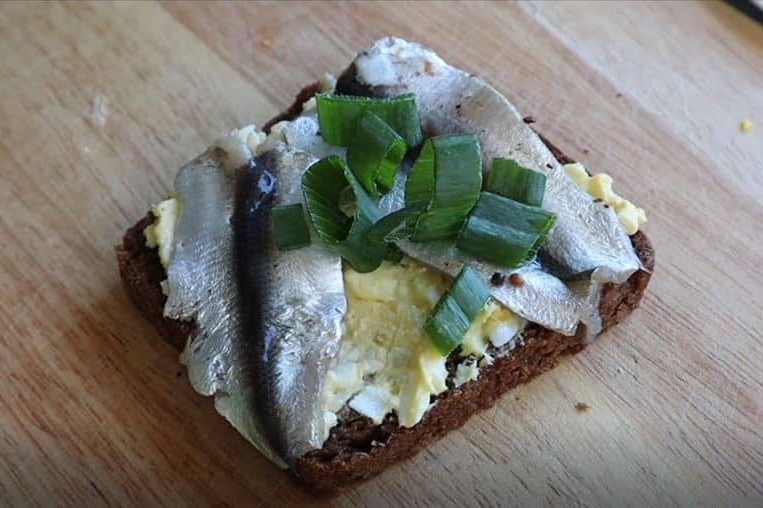
Kiluvõileib (Main dish): An open-faced slice of black rye bread spread with butter or mayonnaise, sprats, hard-boiled egg, and herbs such as green onion or dill. Sometimes cucumbers are also added. This is a traditional Estonian sandwich widely eaten, especially on holidays and other celebratory occasions.
Kohuke (Dairy): Small bars of chilled curd cheese covered with melted chocolate and refrigerated. Usually bought at the store, they come in various flavors and are a beloved children’s snack.
Kohupiim (Dairy): A type of strained cottage cheese, this tangy dairy ingredient is typically used as a baking ingredient in sweet dishes, including in pastry fillings and cakes. Estonian stores offer flavored options, such as vanilla, chocolate, or strawberry.
Kohupiimakreem (Dairy): Kohupiim is whipped with cream and mixed with sweet add-ins to become a yogurt-like snack or dessert. Flavors come in all kinds, from chocolate to blueberry.
Külmsupp (Soup): A summer soup made by adding chopped radish, cucumber, green onions, and dill to cold kefir. It sometimes includes boiled eggs and/or boiled potatoes. Light and tangy, it’s served chilled and sometimes paired with black bread or a boiled potato on the side. The name translates literally to “cold soup.”
Leivasupp (Dessert): Rye bread is boiled, strained, then simmered with cinnamon, sugar, and dried fruit and served with whipped cream, milk, or sour cream. Variations of bread soup exist in the other Baltic states and Nordic countries, such as Latvia’s Rupjmaizes Zupa. The translates literally as “bread soup.”
Marzipan (Dessert): Made in Estonia since the Middle Ages, this sweet almond-based treat remains beloved throughout the country. Marzipan was sold primarily in pharmacies in the 15th century due to its rumored healing properties. Estonia held the title as the Soviet Union’s main producer of marzipan. The marzipan is traditionally handpainted with delicate designs and scenes using vegetable paints, which can still be seen at the Kalev Marzipan Museum Room in Tallinn. Kalev is Estonia’s premier chocolate company.
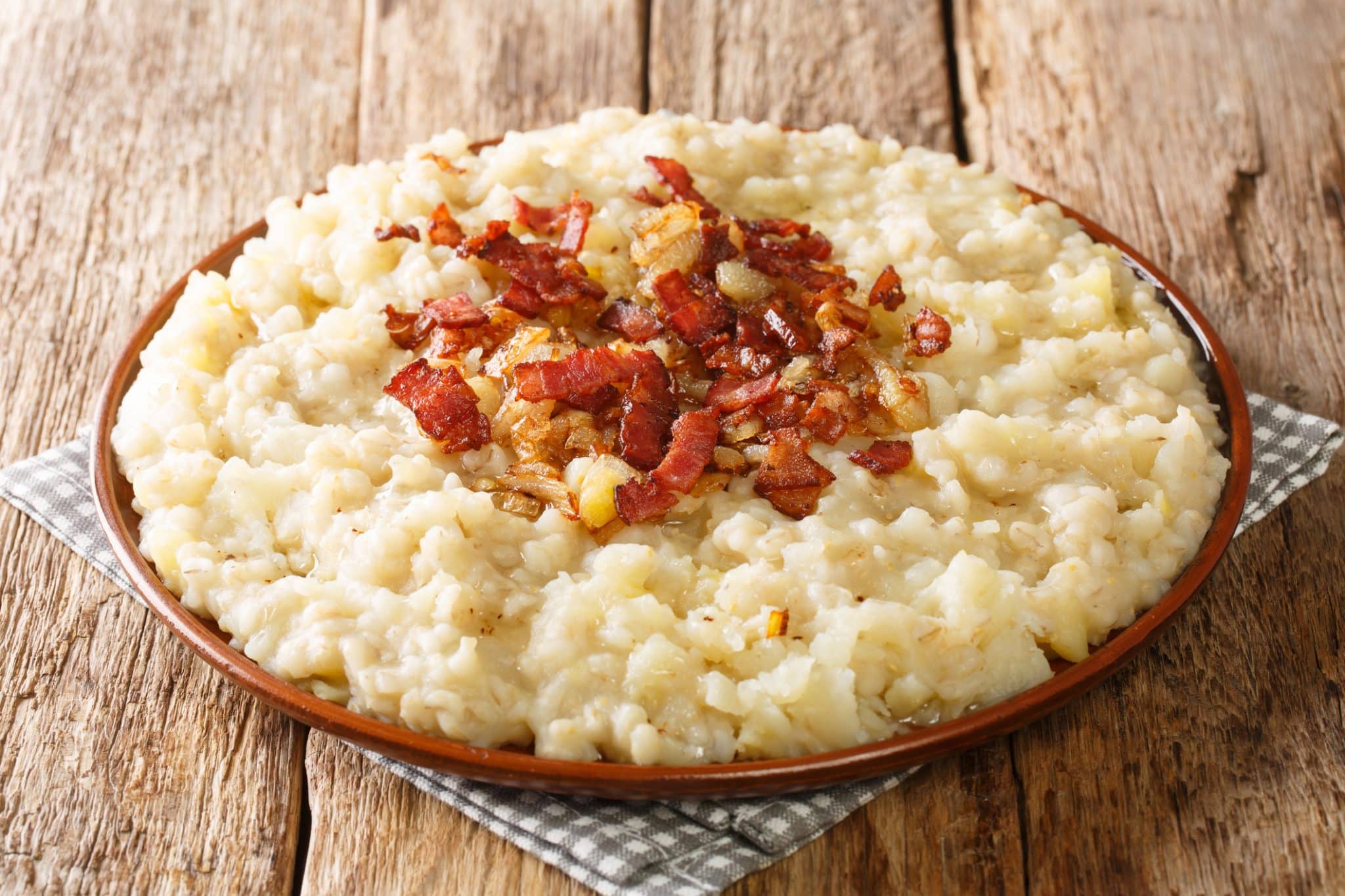
Mulgipuder (Stew): A thick stew made of potato chunks mixed with pearl barley and pieces of fried pork and onions, eaten warm as a filling and rustic meal. This dish is listed in UNESCO’s List of Intangible Cultural Heritage and originally stemmed from the Mulgimaa region in south-central Estonia.
Mushrooms (Ingredient): Estonian forests are filled with mushrooms and every Estonian grandmother keeps her mushroom-picking spot a closely guarded secret. In centuries past, Estonian peasants associated mushrooms with periods of famine or war. Nowadays, they are a celebrated component of Estonian cuisine. Milk mushrooms, russula, boletus and chanterelle can be found in Estonia, and are dried, marinated, or salted. They are used in sauces, pies, casseroles, sauces, and soups.
Mustard (Seasoning): Estonian mustard is very spicy – a little goes a long way! Used in sauces, marinades, or as a meat flavoring, mustard is a common seasoning used in Estonian cooking. Mustard is also a common ingredient in Estonian medicinal home remedies for colds, including mustard foot baths or mustard plasters.
Pancakes (Main dish): Estonian pancakes come in two varieties – one is a larger version that is thinner than an American-style pancake but thicker than a French-style crepe, typically made with milk as the base liquid. The other is a small, fatter version made with kefir or sour milk as the liquid. Both are generally known as pannkoogid in Estonian enjoyed with a variety of toppings, including powdered sugar, berries, jam, cheese curd or in savory versions, such as ham and cheese, or caviar.
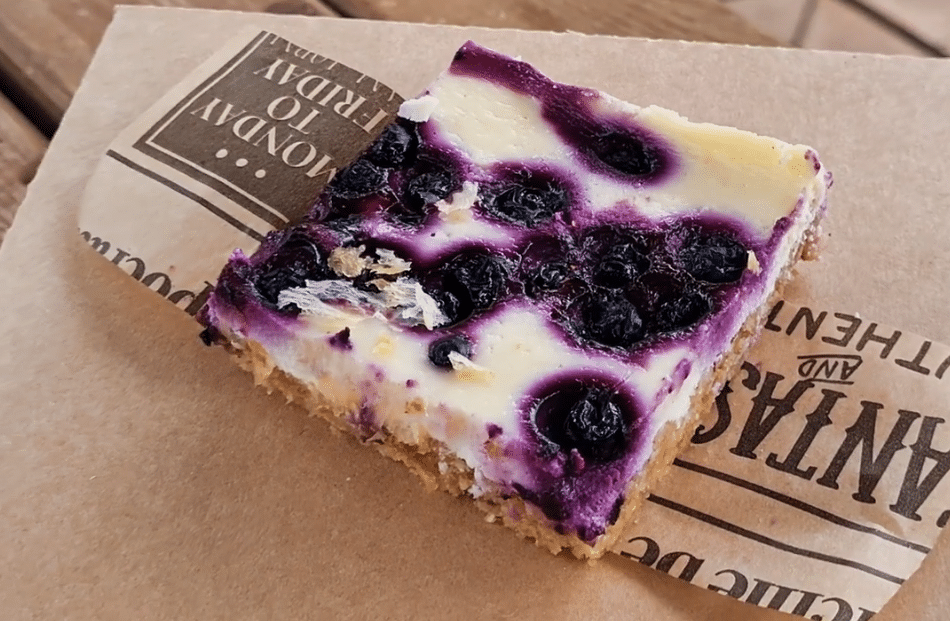
Pastries (Breads): Pastries are a staple snack. Savory varieties often include carrot, cabbage, mushroom, or meat fillings. Sweet pastries might have curd cheese, cardamon, or berry fillings. A plethora of varieties are available at cafes and shops, from the picnic-favorite pirukas with its firm, yeasted shell to the open-faced curd-cheese filled kohupiimakorp and the cinnamon-rich, delicate kringle. More hearty varieties include the lihapirukas, or meat pie, and sibulapirukas, or onion pie, which can be bite size or large enough to slice and serve as a main course.
Pea soup (Soup): Dried yellow peas are slow-cooked with smoked pork or ham hock, onions, carrots, and seasonings like black pepper and bay leaves until the peas break down and the meat becomes tender. Often served with rye bread and a dollop of mustard on the side.
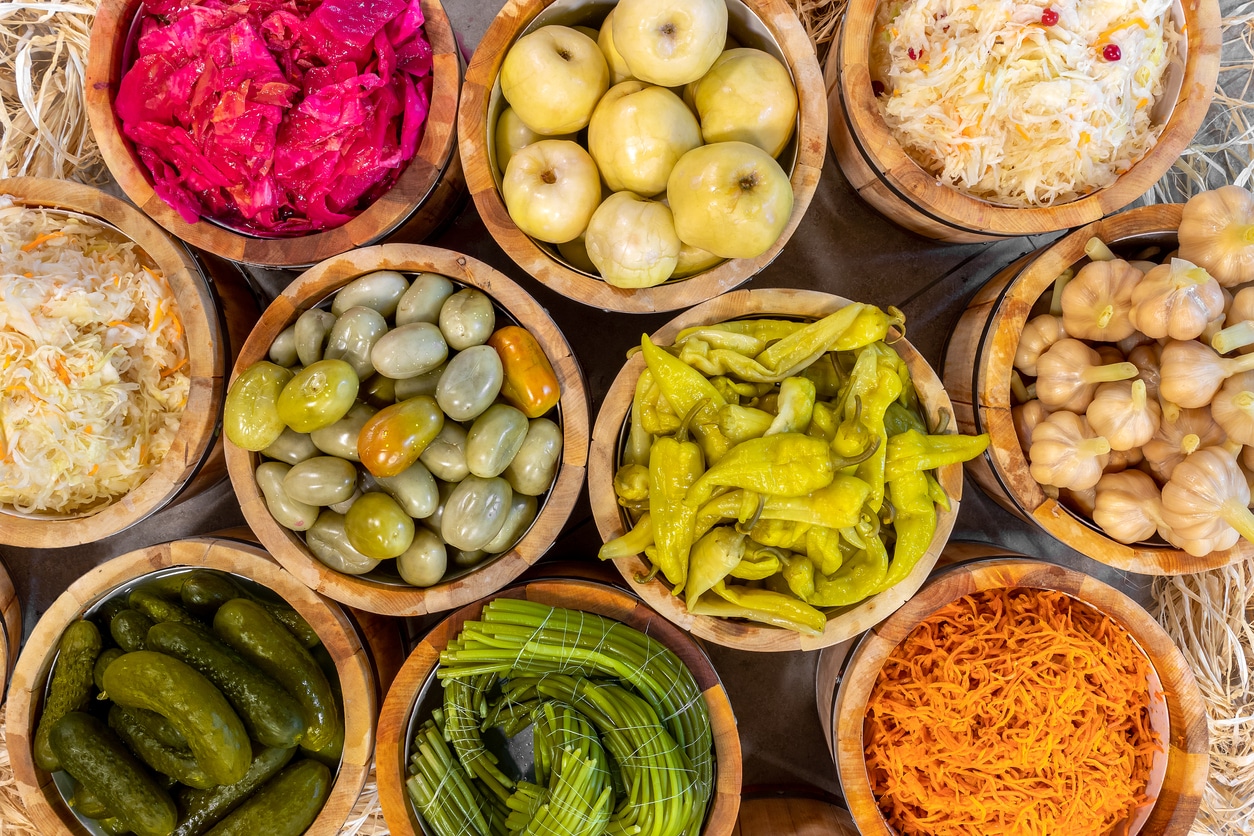
Pickling (Food preparation): Garden plots are common in Estonia as is home pickling for cucumbers, tomatoes, onions, mushrooms, and pumpkin among other plants. Pickling most often uses vinegar as its agent in Estonia and spices vary according to taste but can include dill, garlic, coriander, and blackcurrant leaves. Pickled vegetables have been a staple side dish for centuries and are often eaten as snacks.
Pork (Ingredient): Estonia’s most traditional meat for centuries, pork is typically the centerpiece of holiday meals like Midsummer, Christmas, or New Year’s. Estonian cuisine encompasses a broad array of pork products and nearly all of the animal is eaten as cuts, sausages, mince, pigs’ feet, hams, bacon, pâté, and more.
Potatoes (Ingredient): Potatoes are the main staple of the Estonian diet and are consumed almost every day. Boiled, mashed, baked, or roasted, they are prepared in a variety of ways and most often eaten with sour cream, dill, and/or butter.
Potato salad (Side dish): After a pork entree, potato salad is the second most common item to find on a holiday menu. Estonian potato salad is similar to Olivier salad and contains carrots, hard boiled eggs, ham, pickles, and peas with a half-mayonnaise, half-sour cream sauce.
Potato waffles (Side dish): These long, thin, waffle-imprinted potato crisps are a popular snack in Estonia. Thinner than a Pringle but with a similar texture, they come in a variety of flavors and are a great salty companion to a beer with friends. (Kartulivahvlid)
Rhubarb (Ingredient): Summer in Estonia is rhubarb season. Fresh rhubarb is baked into sponge cakes, turned into shortcake bars, topped with meringue, and other more creative measures. While rhubarb is often mixed with another fruit in other cultures, it’s frequently featured on its own in Estonian cuisine.
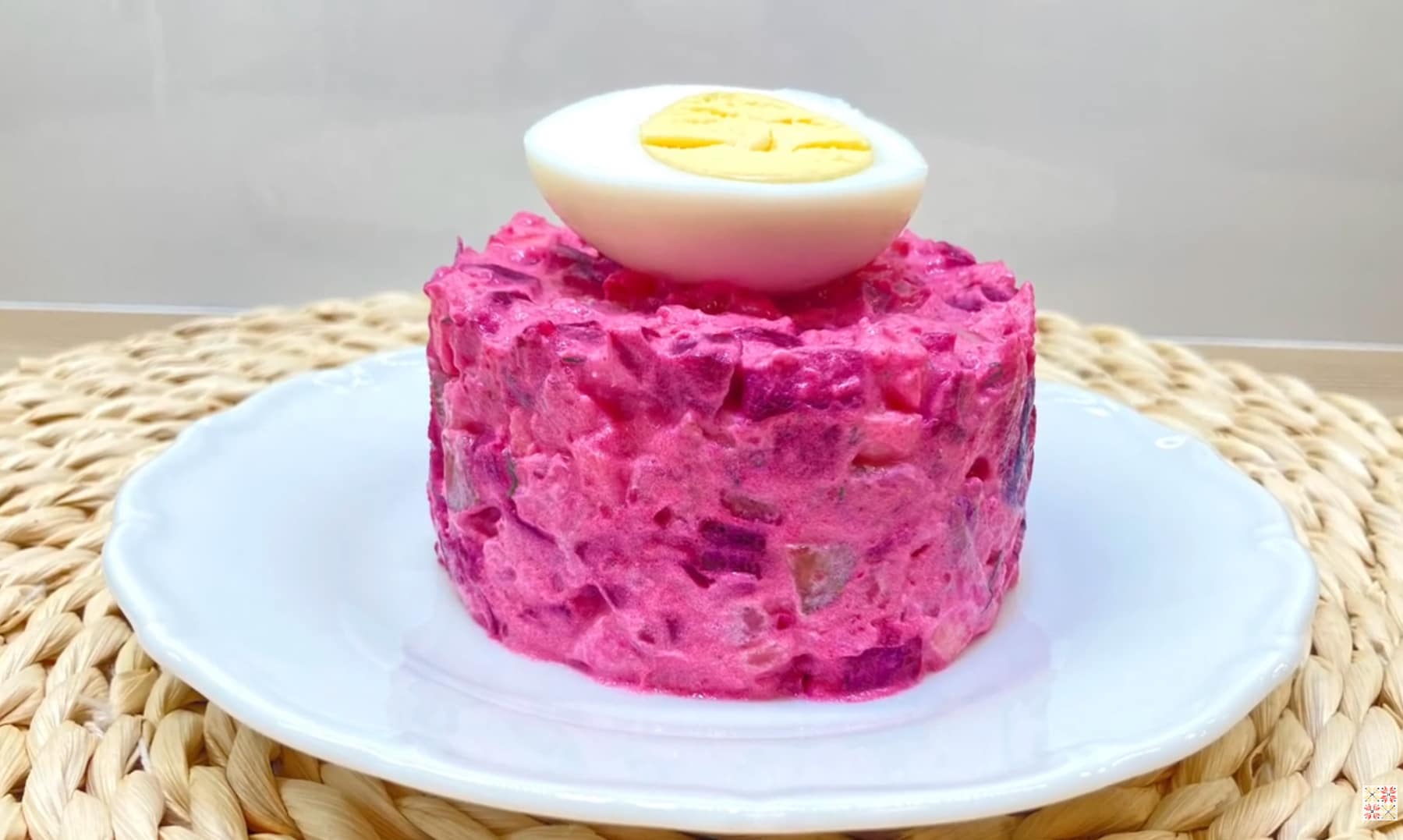
Rosolje (Side dish): This is a cold salad which also exists in Finland. The Estonian version contains beets, potatoes, pickles, apples, eggs, sausage, and onions with the optional addition of herring. The sauce is sour cream, mustard, sugar, black pepper, and vinegar. Rosolje is typically served as a side dish.
Sauerkraut (Side dish): Sauerkraut is a dish popular during autumn and winter, and always appears on the table during holidays such as Christmas and New Year’s. It is usually prepared with pearl barley and pork.
Semolina mousse (known as vispipuuro or mannavaht) (Main dish or dessert): This is prepared by cooking semolina in juice, water, and sugar and whipping it into a light foam. It’s usually served with fresh berries and cold milk, and is considered a children’s breakfast dish. Occasionally it’s eaten as dessert.
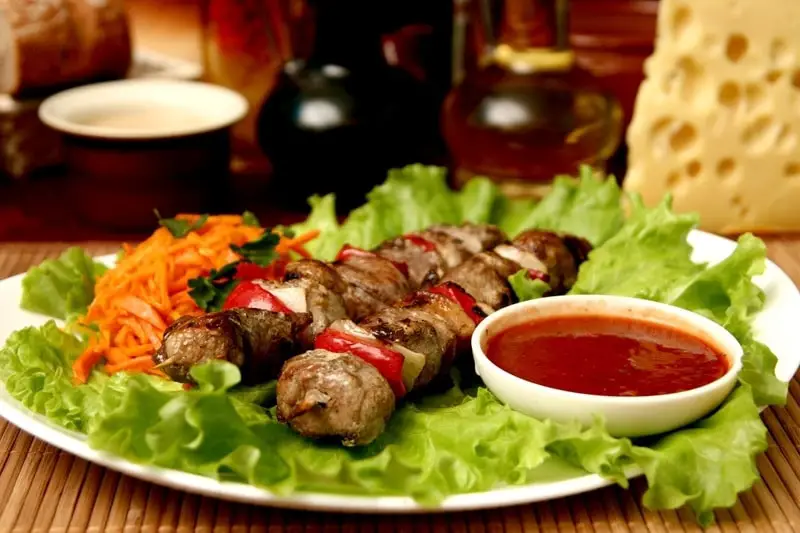
Shashlik (Food preparation): Chunks of marinated meat are skewered and roasted over a grill or bonfire. Pork is the most common, but chicken and beef shashlik are also becoming widespread. Vegetables and hard cheeses (known as “grill cheese”), might be similarly prepared to accompany the meat course. Especially common on holidays and in summer, it’s a tradition shared with many other ex-Soviet countries.
Sõir (Dairy): This is an Estonian cheese flavored with caraway seeds and typically eaten for breakfast or as a snack with bread or crackers. It is also often eaten around a Midsummer’s Eve bonfire along with shashlik.
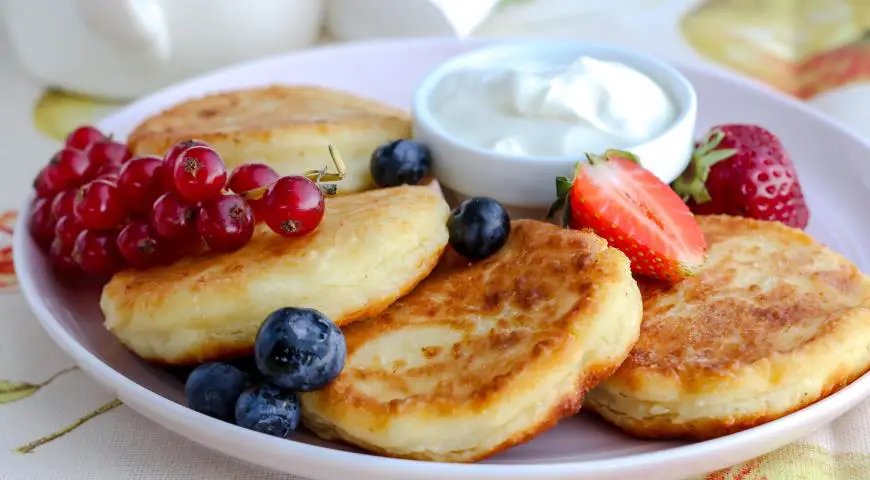
Sõrnikud (Main dish): These curd cheese fritters are made with kohupiim (see above), flour, sugar, and eggs, then fried into little golden patties and eaten with sour cream and/or jam. These are essentially identical to the Slavic dish known as syrniki.
Sour cream (Dairy): Sour cream is consumed in copious amounts in Estonia, traditionally with 20% milkfat. Eaten with potatoes, dumplings, and salads, it’s considered the perfect condiment for just about anything.
Sprats (Ingredient): Baltic sprats are typically preserved and used as a topping on open-faced sandwiches. Sprats are smaller members of the herring family with a similar appearance but milder taste.
Sült (Main dish): This is a meat jelly made from simmering pork hooves and knuckle (beef can also be used) with seasonings until the meat falls off the bones. It is removed, finely chopped, returned to the liquid, and allowed to set in the fridge. Traditionally this was a way for Estonian peasants to preserve “leftover” meat during winter. Typically it’s eaten with horseradish, mustard, and potatoes.
Tomato and cucumber salad (Side dish): A common side dish, often made with garden-fresh tomatoes and cucumbers. It’s traditional to eat with homemade sour cream and dill dressing.
Vana Tallinn (Spirit): Estonia’s national liqueur, Vana Tallinn is a rum-based alcohol spiced with herbs, citrus, and vanilla. First created in 1960, it comes in traditional and cream varieties which can be added to cocktails, coffee, or mulled wine, or alternatively served over the rocks.
Vastlakukkel (Breads): These are sweet pastries baked with cardamom and filled with whipped cream. They mark Shrove Tuesday, although they begin filling bakery shelves about a week prior to the holiday.
You’ll Also Love
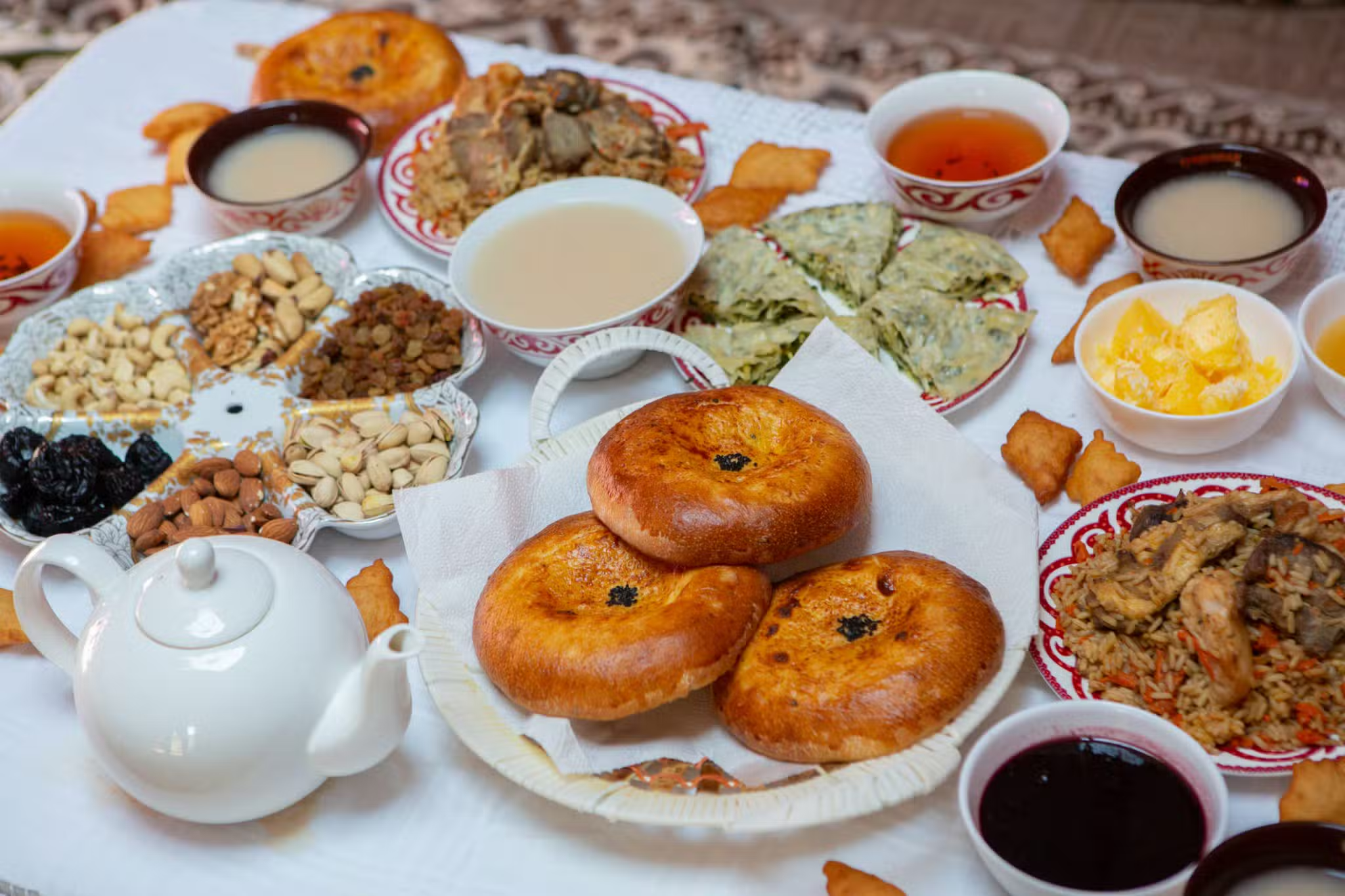
The Kyrgyz Food Dictionary
Kyrgyz cuisine reflects the country’s heritage of pastoral nomadism. Life was spent moving livestock from pasture to pasture and living in collapsible, transportable yurts. The livestock themselves were the primary, sustainable food source. Everything else was either gathered from the land or traded for. The Kyrgyz did not engage in intensive settled agriculture until forced […]
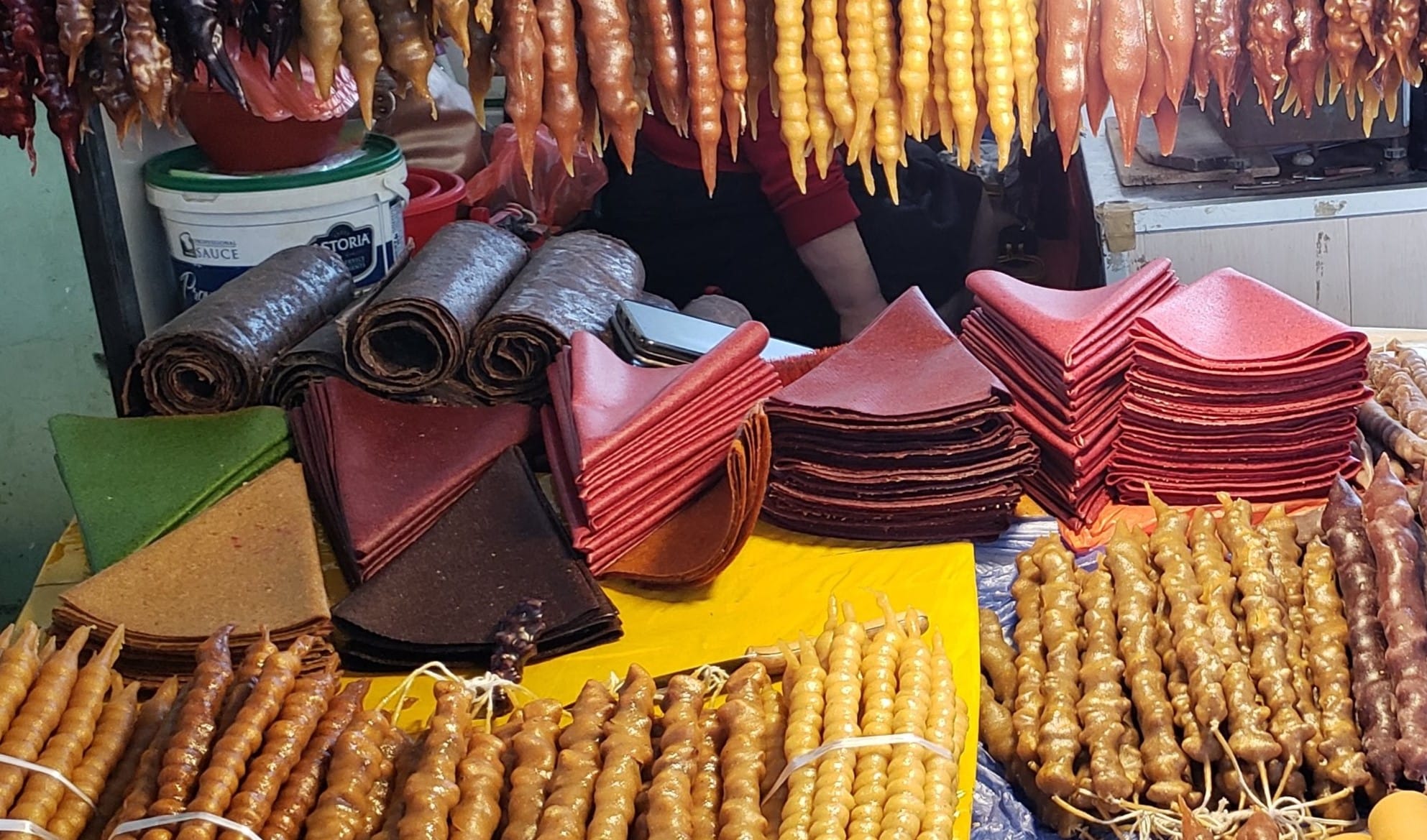
Tklapi, Pastegh, Lavashak: One Ingredient Fruit Leather from the Caucasus
Fruit leather is simple, ancient food. Like bread and roasted meat, it likely independently evolved in several places. At its most basic, it is simply mashed fruit smeared to a sheet and left to dry in the sun. The result is a flavor-intensive food that travels well and can keep for months. The oldest known […]
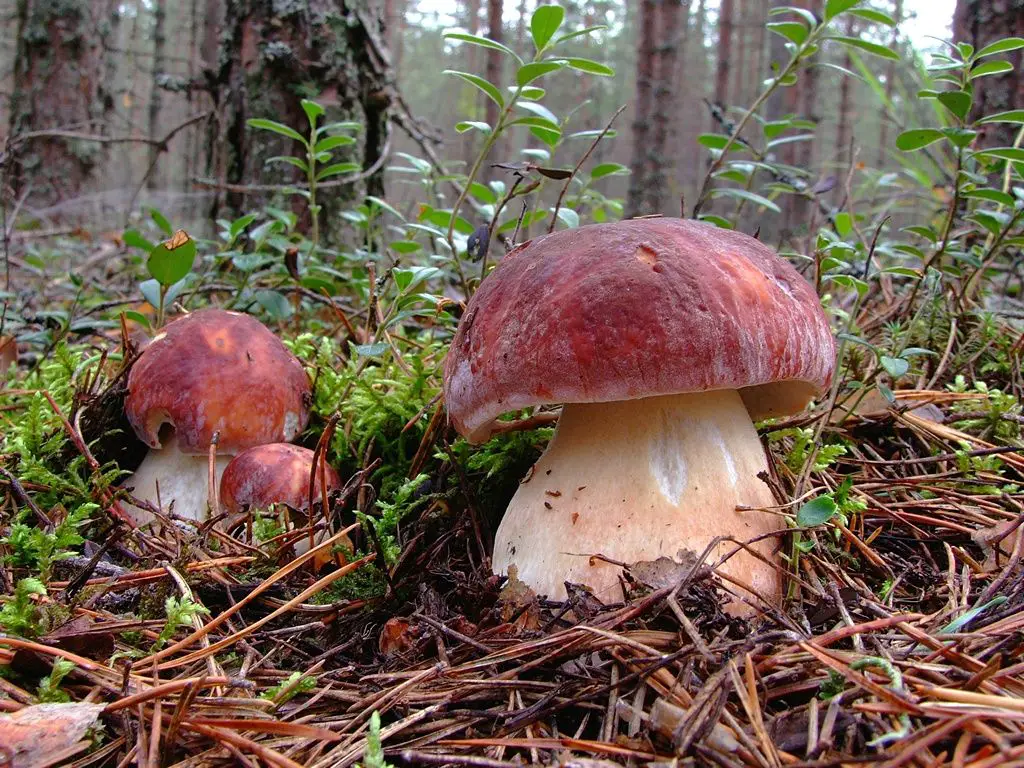
Mushroom Season Has Begun! Olga’s Blog
Olga below discusses the deeply held national tradition of mushroom gathering. An important part of Russian food tradition for many centuries, Russian children are taught in school from an early age to tell the difference between various types of native mushrooms. Many, like Olga, will go with relatives and friends to the woods to put […]
All About Shashlyk (BBQ from the Caucasus)
Shashlyk (шашлык) is considered to be one of the very first dishes humans invented and most likely hails from the place the first modern human likely appeared – the area covering Iran, Iraq, Lebanon, and the Caucasus. How “Shashlyk” Got Its Name (Почему он так называется?) The word “шашлык” was adopted into Russian in the […]
Pickling Russian Style
The process of pickling (соление) is well-known in Russia, and any traveler visiting Russia, Ukraine, or Belarus will undoubtedly come across several traditional pickled dishes that seem strange and exotic. With a relatively short growing season, preserving food has always been of special importance in Russia, where you can easily find pickled cucumbers, tomatoes, mushrooms, […]